Film · TV · Commercials · Stills
Film and TV production restroom rental in the Bay Area
Quick answer
PottyLine supplies film, TV and commercial productions across the Bay Area with restroom trailers from $2,495 per weekend and portable units from $195 per shoot day, including delivery, pickup and stocking within 25 miles of Hayward. Off-hours delivery before 6 AM costs a flat $150, and every production gets one invoice.
- Early, late and Sunday deliveries — flat $150, no negotiation
- Location moves mid-shoot, generator-powered trailers for remote sets
- Dated photo proof for every delivery, pump-out and move
- One invoice per production, PO numbers welcome
Instant price
Adjust quantities
- Standard restroom$1955
- Luxury flushing restroom$2950
- ADA / Title 24 accessible$3251
- Handwash station$992
- 2-stall luxury trailer$2,4950
- 4-stall luxury trailer$3,2950
- 8-stall luxury trailer$4,6950
- ADA + 2 luxury trailer$3,4950
- 8-stall shower trailer$3,4950
- Generator 7 kW$7500
Includes delivery, pickup, and tax.
What productions rent
Event rates for shoot days. Delivery, pickup, stocking and tax included.
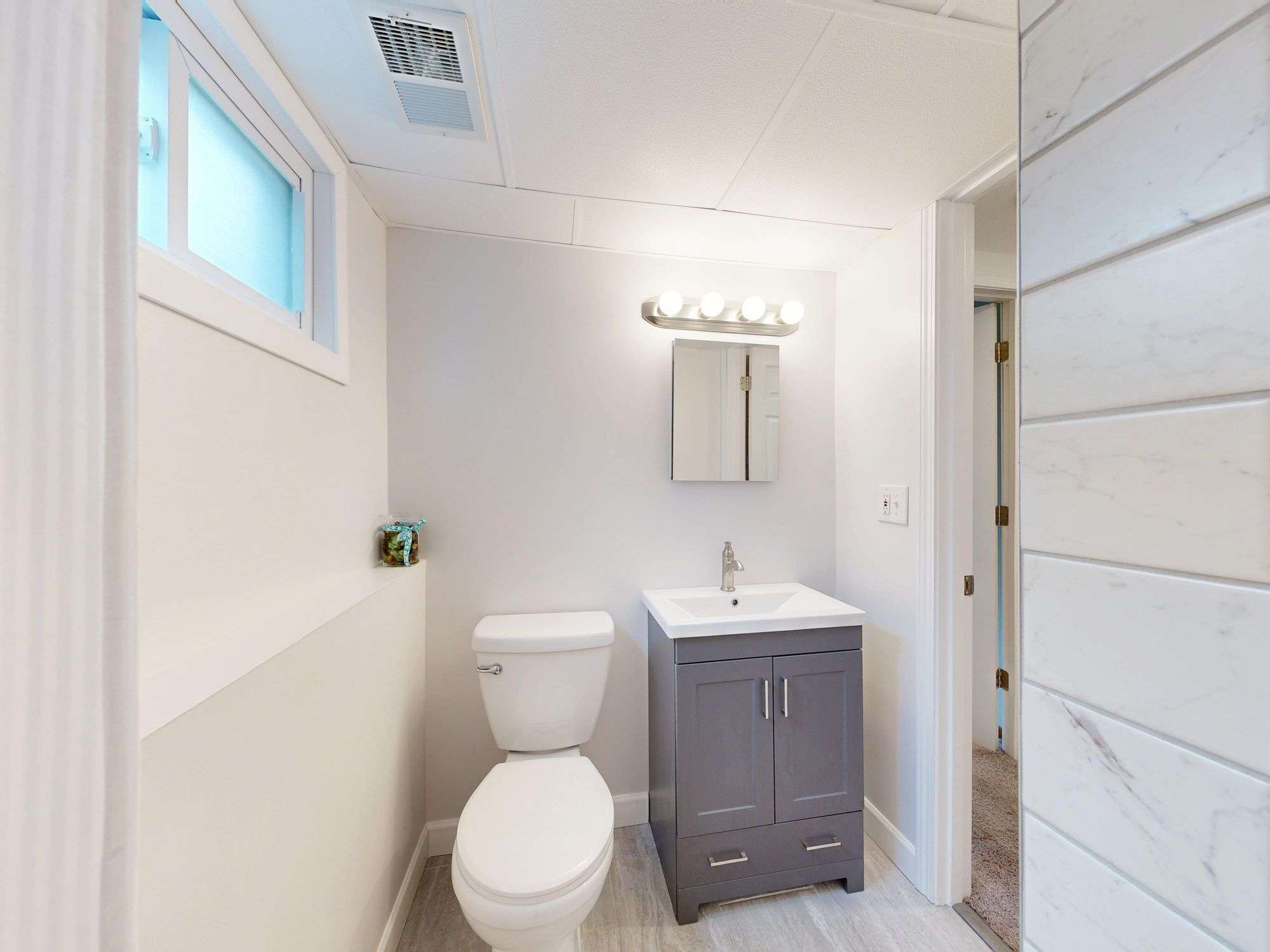
2-stall luxury trailer
Up to 150 guests. A/C, running water, lighting.
$2,495 / event, all-in
ADA + 2 luxury trailer
Accessible suite plus two standard stalls. Up to 200 guests.
$3,495 / event, all-in
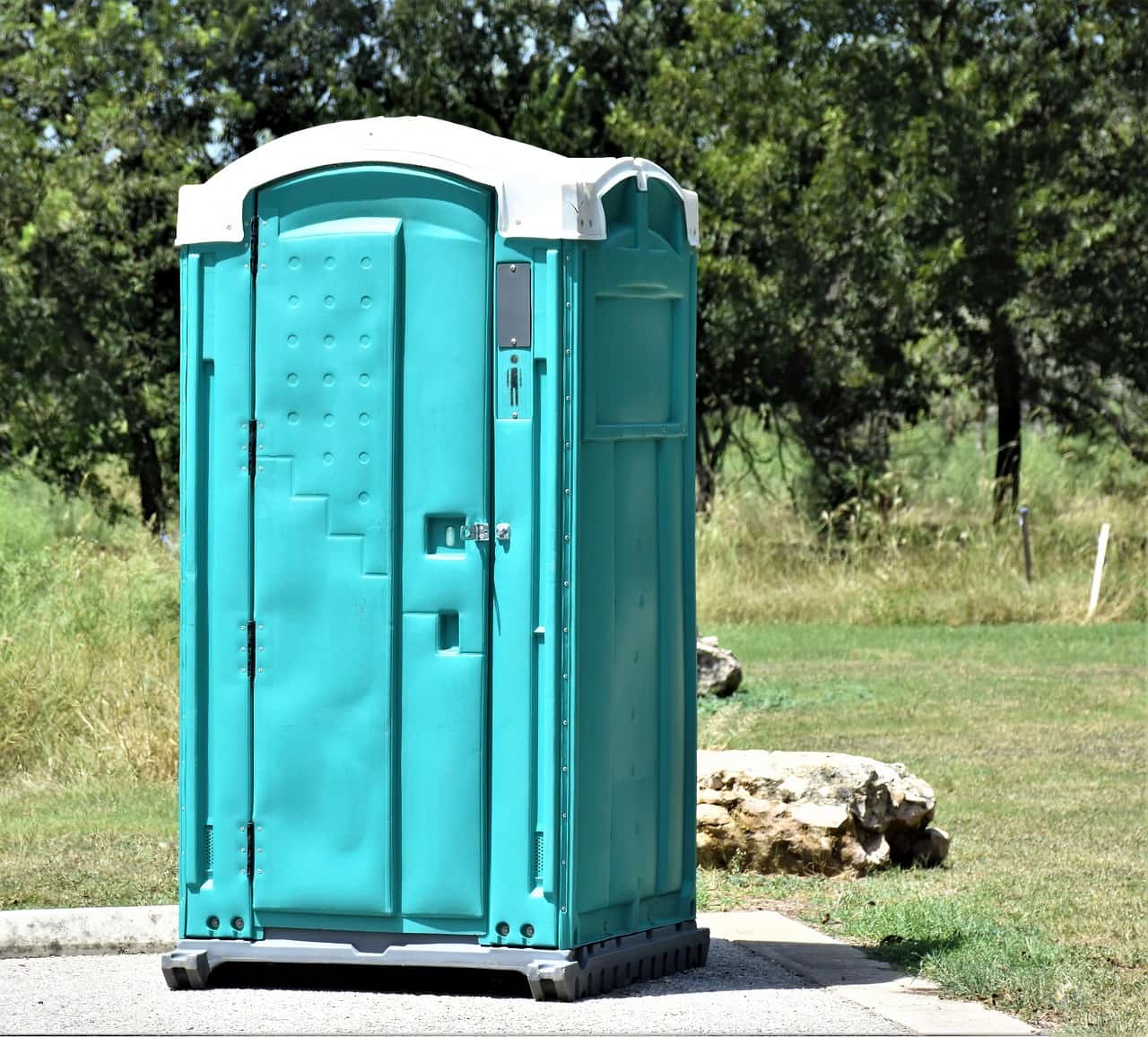
Luxury flushing restroom
Flush toilet, interior sink, mirror, solar light. Also called a deluxe unit.
$295 / event, all-in
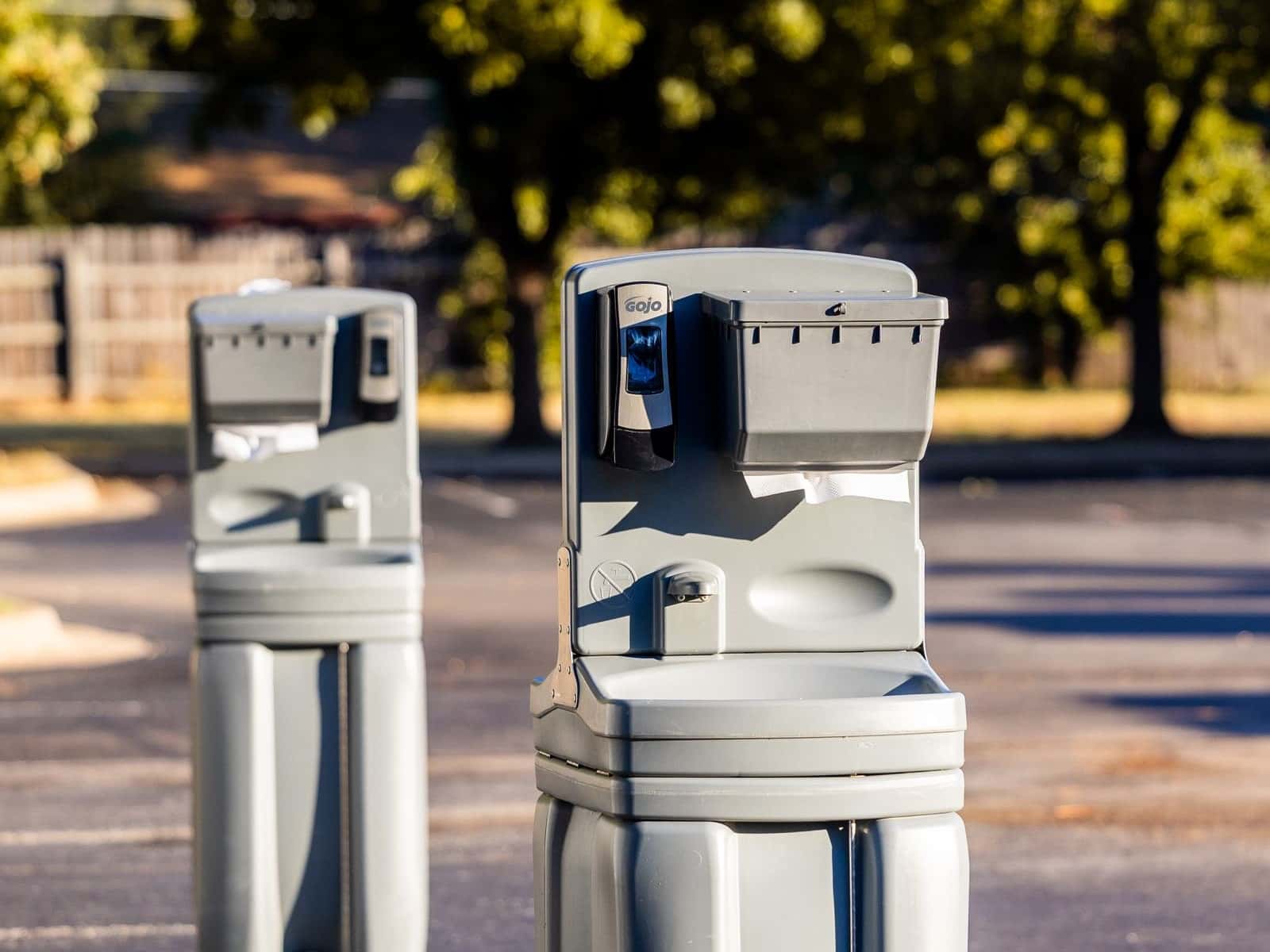
Handwash station
Two-sided sink, soap, towels. 1 per 20 workers.
$99 / event, all-in
Generator 7 kW
Powers any trailer where there's no hookup.
$750 / event, all-in
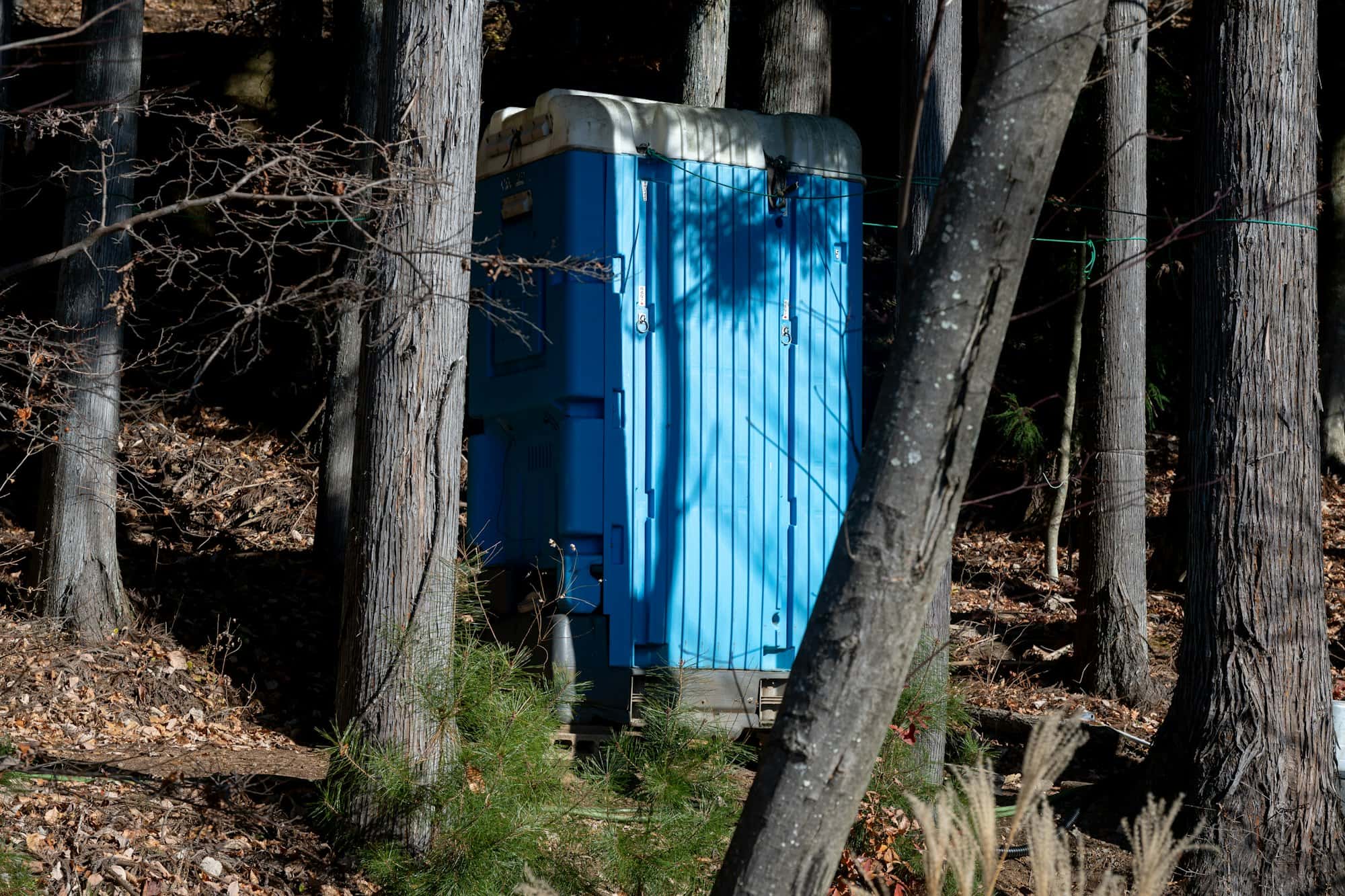
Standard restroom
The workhorse. Clean, stocked, serviced weekly.
$195 / event, all-in
The rules that apply
Production restrooms are governed less by statute than by union expectations, the film office permit and the location agreement. Here is what each one asks for, with the sources.
Crew ratios and union expectations. The working ratio in the industry is 1 toilet per 10 to 15 crew, tighter than the Cal/OSHA 1-per-20 construction rule, because crews break together. IATSE locals expect trailer-level facilities for long days: climate control, running water, mirrors and lighting. SAG-AFTRA agreements require separate facilities for principal performers, which in practice means a private unit or trailer at base camp that background does not use. Cal/OSHA 8 CCR §1527 still applies to every employer: 1 washing facility per 20 workers with soap and single-use towels (dir.ca.gov/title8/1527.html).
FilmSF (San Francisco Film Commission). Shoots on San Francisco streets, sidewalks and city property need a film permit from Film SF. Apply at least 5 business days ahead; applying is free, with fees charged per shoot or parking day; the application and a certificate of insurance go to film@sfgov.org. The office is at City Hall, Room 473, (415) 554-6241. Production vehicle parking, which is where restroom units and trailers sit, is requested on the same application. Source: sf.gov film permit.
Caltrans (state highways and freeways). The California Film Commission issues Caltrans permits. Standard applications need at least 4 business days; freeway and road closures need 12 business days, and interstate filming needs 30 days for federal approval. Caltrans closes freeways only on weekends. The rule that matters for us: "Closed freeways may never be used as base camps," and only essential production vehicles, which Caltrans lists as portable restrooms and necessary equipment trucks, are allowed on the closed roadway, with an 11-foot emergency lane kept clear. Source: film.ca.gov Caltrans permits.
Other Bay Area cities. Oakland, San Jose, Berkeley and the Peninsula cities each run film permits through a film office or the city manager's office; the permit sets where production vehicles may stand. Street placement outside that footprint falls back to the city's right-of-way rule: San Francisco Public Works Street Space permit, Oakland DOT Obstruction Permit, San Jose Public Works Encroachment Permit. On private property and at stages, no permit is needed.
| Requirement | What it means for restrooms | Lead time |
|---|---|---|
| Crew ratio 1 per 10–15 | 3–4 units or a 2-stall trailer + 2 units for a 40-person crew | Book with the call sheet |
| SAG-AFTRA separate talent facilities | Private unit or trailer at base camp, not shared with background | Same order |
| FilmSF permit | Covers production parking where units sit; COI required | 5 business days |
| Caltrans closure | Restrooms allowed on closed freeway as essential vehicles; no base camp | 12 business days (30 for interstate) |
| 8 CCR §1527 | 1 handwash per 20 crew, soap + towels | Same order |
How many units you need
Size by crew plus talent, not by call sheet total alone: background holding, extras and the catering line have different peaks. The instant price calculator accepts a crew count and a shoot-day count and returns a unit list and an all-in price.
| Crew on set | Crew units (1 per 10–15) | Talent facility | Handwash stations | Suggested configuration |
|---|---|---|---|---|
| Up to 15 (stills, small commercial) | 1–2 | 1 deluxe unit | 1 | 2 deluxe units + 1 handwash |
| 16–40 (commercial, episodic day) | 3–4 | 2-stall trailer | 1–2 | 2-stall trailer + 2 standard units + 1 handwash |
| 41–75 (feature, 2nd unit) | 5–6 | 2-stall or ADA+2 trailer | 2 | 2-stall trailer + 4 standard + 2 handwash |
| 76–120 (feature, large base camp) | 8 | 4-stall trailer | 3 | 4-stall trailer + 4 standard + 3 handwash + generator |
| 121–200 (large episodic, live broadcast) | 12–14 | 4-stall + private unit | 4 | 8-stall trailer + 6 standard + 4 handwash + generator |
| Background holding, 100 extras | 7 | — | 2 | 7 standard + 2 handwash near holding |
Two location notes. Remote exteriors (ridgelines, beaches, vineyards) add a generator and often a second standard unit at the set itself so crew do not walk back to base camp. Night shoots count as a full shoot day; a 12-hour fuel load covers one night.
Size the base camp in 30 seconds: Instant price · or call (650) 977-2883.
Recommended units and packages
- 2-stall luxury trailer — $2,495 per 3-day block or weekend. 12'×8', climate control, running water, mirrors and LED lighting. The talent and department-head trailer for most commercials and episodic days.
- 4-stall luxury trailer — $3,295. 18'×8'. Base camp for crews of 75 to 120.
- ADA+2 luxury trailer — $3,495. 20'×8.5', one accessible stall plus two standard. Required when the public shares the location, and the right call for any cast or crew member who needs ground-level access.
- Luxury flushing unit — $295 per shoot block. Flush toilet, interior sink, mirror, solar light. The private unit for talent on small shoots and the department-head unit at a second location.
- Standard unit — $195 per shoot block. 44"×48"×91", 70-gallon tank. Crew and background holding.
- Handwash station — $99. Two-sided, 22 gallons fresh. One per 2 to 4 units and one at craft services.
- 7 kW generator — $750. 62 dB, 12 hours of fuel, placed where sound asks.
Multi-week productions move to monthly rates: standard $189, deluxe $289, 2-stall trailer $4,900, 4-stall $6,400, each including weekly service.
Pricing for film and TV
Shoot-day prices cover up to 3 days or a Friday-to-Monday weekend, including delivery, pickup and a full stock. All-in within 25 miles of Hayward; beyond that, $3.50 per extra mile, charged once and printed on the quote. Peak season (May to October) adds 15% on trailers only. The full list is on the pricing page.
| Package | Crew | Includes | Price |
|---|---|---|---|
| Stills / small commercial | Up to 15 | 2 deluxe units, 1 handwash station | $689 |
| Commercial base camp | 16–40 | 2-stall trailer, 2 standard units, 1 handwash | $2,984 |
| Remote location | 16–40, no power | 2-stall trailer, generator, 1 off-hours delivery | $3,395 |
| Feature base camp | 76–120 | 4-stall trailer, 4 standard, 3 handwash, generator | $5,122 |
| Talent-first | Any | ADA+2 trailer with accessible stall | $3,495 |
| Background holding | 100 extras | 7 standard units, 2 handwash | $1,563 |
Add-ons productions use: off-hours delivery (before 6 AM, after 6 PM or on Sundays) $150 per delivery; same-day location move billed as one line; mid-shoot pump-out and restock $125 per visit; attendant $45 per hour, 4-hour minimum; next-day delivery $95 if ordered by 2 PM; optional damage waiver 8%. Cancellation is free more than 48 hours before delivery and 25% inside 48 hours, which matters when a location falls through on a Thursday.
Get your all-in base camp price in 30 seconds: Instant price · or call (650) 977-2883.
Logistics
Call-sheet timing. Send us the call sheet or type the call time into the order. For a 5 AM call we deliver at 4:30 AM or the evening before, whichever the location allows, at the $150 off-hours rate. The driver texts a photo of the placed, leveled, stocked unit before leaving.
Base camp layout. A 2-stall trailer needs a level spot about 45 feet long by 12 feet wide with 13 feet of overhead clearance, within 100 feet of power or beside the generator. Put the talent trailer at the edge of base camp nearest the set, crew units beside catering with a handwash station at craft services, and background holding units at the holding area. In San Francisco, the FilmSF permit's production-parking lines decide where that footprint is; in Oakland, Obstruction Permit clearances (5'6" of sidewalk) do the same job.
Quiet windows. Generators run at 62 dB at the unit. We place them at the end of the cable run and schedule refuels during meal breaks. Pump-outs on multi-day shoots happen before call or during lunch, never during a take; tell the driver which it is.
Location moves. Second location by lunch? That is a move on the same order. The driver follows the company move, re-levels and re-stocks, and the move is one invoice line. Same-day moves inside the 25-mile zone are scheduled from the portal or by text.
Remote and state-road locations. For Caltrans closures, restrooms are the one thing allowed on the closed roadway, so we stage the unit inside the closure with the 11-foot emergency lane clear. For ridgeline or beach locations in Marin, the Peninsula or the San Jose foothills, we check truck access from a photo and tell you yes or no before you book.
Paperwork. W-9, PO numbers and one invoice per production, downloadable from the portal. Payment by card, Apple Pay, Google Pay or ACH, or Net-30 for approved production companies.
Compliance checklist
- Crew count is sized at 1 unit per 10 to 15 crew, plus a separate facility for principal talent.
- One handwash station per 2 to 4 units, with one at craft services (8 CCR §1527).
- FilmSF or the local film office permit is filed (SF: 5 business days, film@sfgov.org) and the production-parking footprint includes the restroom units.
- Caltrans permit lead time is met (4 business days standard, 12 for closures) and restrooms are listed as essential vehicles.
- Any unit outside the permitted footprint has the city right-of-way permit (SF Street Space, Oakland Obstruction, San Jose Encroachment).
- Public-shared locations include at least 5% accessible units (minimum 1), or the ADA+2 trailer.
- COI lists the production company and the location owner as additional insured.
- Power is confirmed (2 to 3 × 20 A circuits) or a generator is on the order with 12 hours of fuel per shoot day.
- Off-hours delivery and any location moves are on the order with times from the call sheet.
- Pump-out windows are agreed with the 1st AD (before call or at lunch).
For events with a public audience, such as premieres and fan screenings, the events page covers guest-count sizing.
Why PottyLine
Production coordinators judge a vendor on three things: did the truck show up at 4:30, is the paperwork in the inbox, and is the invoice the number that was quoted. Here is how we handle each.
- Call time is the schedule. Off-hours delivery is a flat $150, and we schedule delivery around your call sheet, not a depot schedule. The driver's photo lands in your text thread before first truck.
- Paperwork on the portal. W-9 and PO numbers are downloadable, and the service photo log is in your online account, without calling an office.
- One invoice per production. Trailers, units, generator, moves and off-hours all on one invoice, with PO numbers on each line. Net-30 for approved production companies.
- The price is published. $195 per standard unit, $2,495 per 2-stall trailer, all-in inside 25 miles, 15% peak season shown up front. Comparable national trailer rates run $2,500 to $2,800 for a 2-stall weekend before delivery.
- Proof of every visit. A dated photo for each delivery, pump-out and move, sent by text or email, so a lost unit on a 6-location day is never a mystery.
- Trilingual. English, Spanish and Chinese on the phone and on the site, which helps when the location manager and the driver on the other side of the fence speak different languages.
We are a new, owner-operated company out of Hayward. Our founder came from construction and logistics, where a truck that is 20 minutes late costs a crane crew an hour. We treat your call time the same way.
Frequently asked questions
How many restrooms does a film crew need?
Plan 1 toilet per 10 to 15 crew, plus a separate facility for principal talent. A 40-person commercial crew needs 3 to 4 units or a 2-stall trailer plus 2 units. Add 1 handwash station per 2 to 4 units and, when the public shares the location, 1 ADA unit per cluster. The calculator sizes it from the crew count.
What does a restroom trailer cost for a shoot?
A 2-stall trailer costs $2,495 and a 4-stall $3,295 for up to 3 shoot days or a Friday-to-Monday weekend, all-in within 25 miles of Hayward. Multi-week productions pay the monthly rate instead: $4,900 for a 2-stall and $6,400 for a 4-stall for 28 days with weekly service. Peak season (May to October) adds 15% on trailers.
Can you deliver before a 5 AM call time?
Yes. Deliveries before 6 AM, after 6 PM or on Sundays are a flat $150 per delivery, no negotiation. Tell us the call time and the driver is set before the first truck arrives. Same-day location moves are billed as a move on one invoice line, not as a second order.
Can a unit move with the company to a second location?
Yes. A same-day move inside the 25-mile zone is part of the same order: the driver follows the company move, re-levels and restocks the unit, and the move is one line on the production invoice. Schedule it from the portal or by text, ideally with the times from the call sheet, and each move is photographed and time-stamped.
Do you provide honeywagons with dressing rooms?
We provide restroom trailers and private units for base camp, including the ADA+2 trailer ($3,495) and the 4-stall ($3,295). For combination honeywagons with dressing rooms and makeup stations, ask us; we coordinate with production-equipment houses so the restroom side of base camp is on one invoice.
What do you do about generator noise on set?
Our 7 kW generator runs at 62 dB and ships with 12 hours of fuel, $750 per shoot block. We park it where the sound department points, up to the length of the cable run, and swap or refuel mid-day on long shoots. Trailers can also run on 2 to 3 dedicated 20-amp circuits if the location has house power.
Do I need a permit to put a restroom unit on a San Francisco street for a shoot?
Yes. The FilmSF permit covers filming and production parking on city streets; apply at least 5 business days ahead to film@sfgov.org. Applying is free and fees are charged per shoot day. Where a unit occupies sidewalk or parking lane outside the permitted footprint, Public Works' Street Space permit applies. We flag it when you enter the address.
Built for the call sheet
Tell us the call time and we'll be set before the first truck. Need the trailer at the second location by lunch? That's a move, not a new order — one line on the invoice.
Quiet on set
Our generators run at 62 dB and we park them where sound asks. Trailers are climate controlled so talent and crew have somewhere decent between setups.
Paperwork that keeps up
W-9s, PO numbers, and a single invoice per production — download anything from the portal without calling an office.
Send us the call sheet.
Or price it yourself in 30 seconds — the calculator understands shoot days.