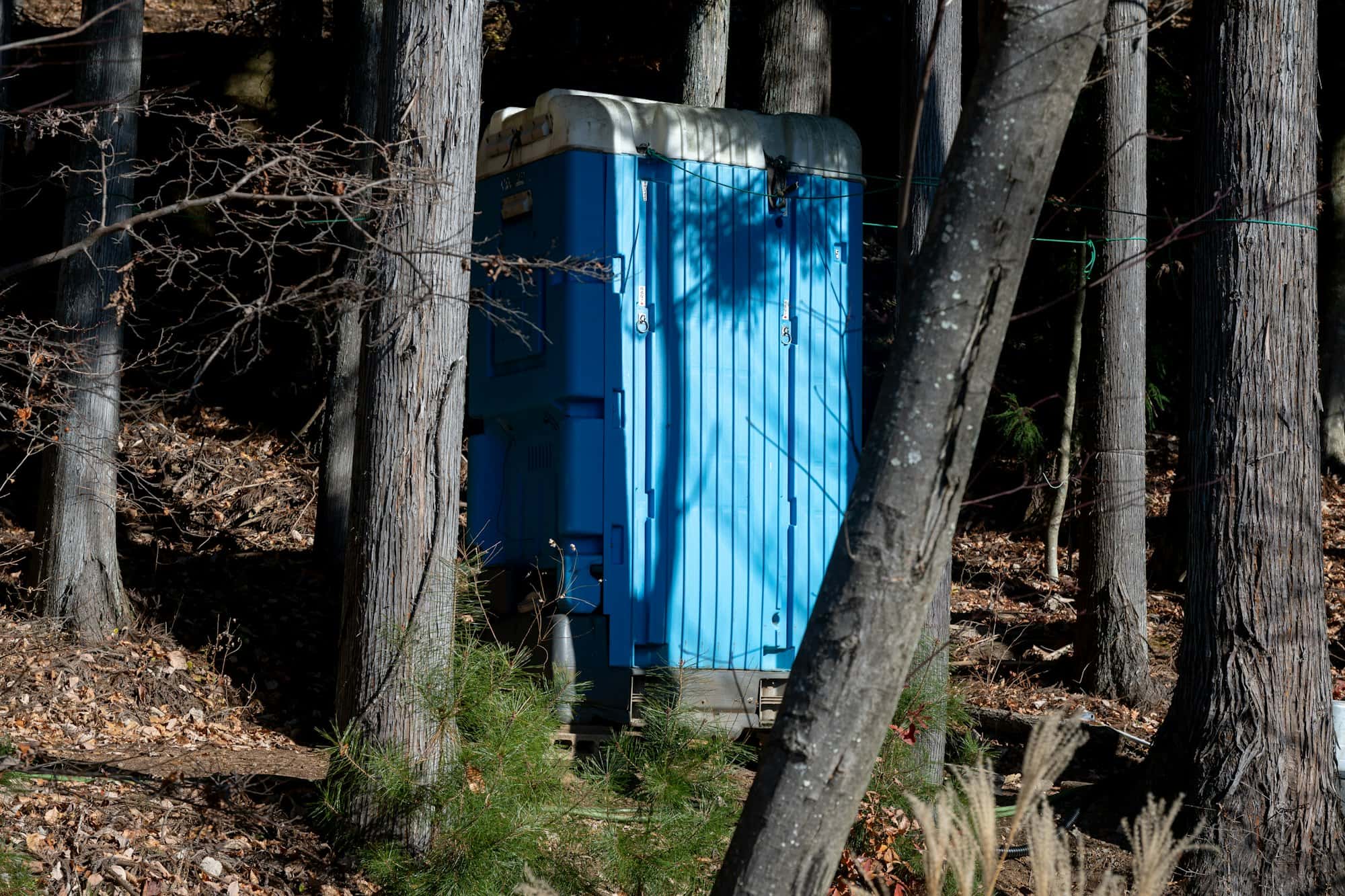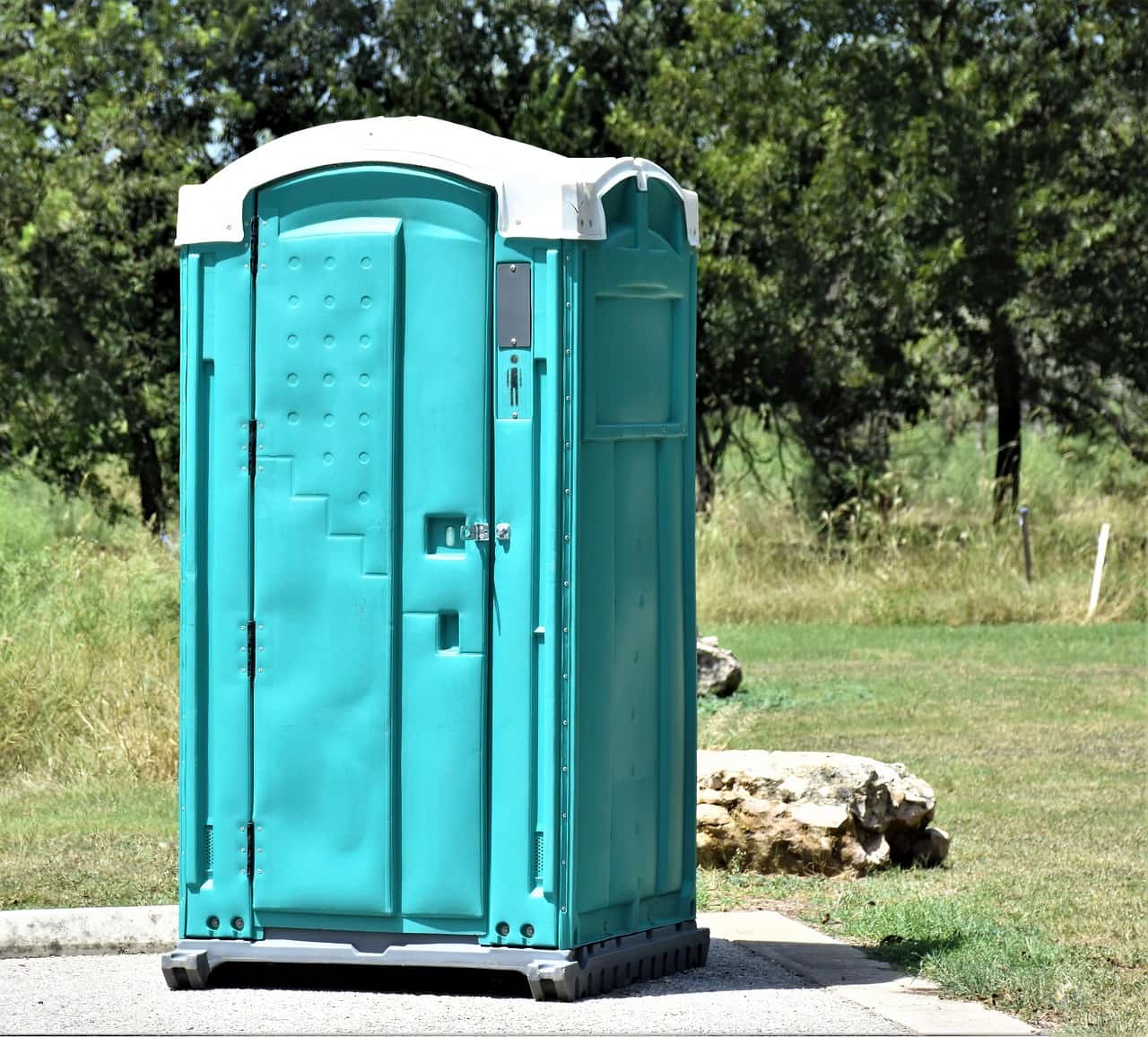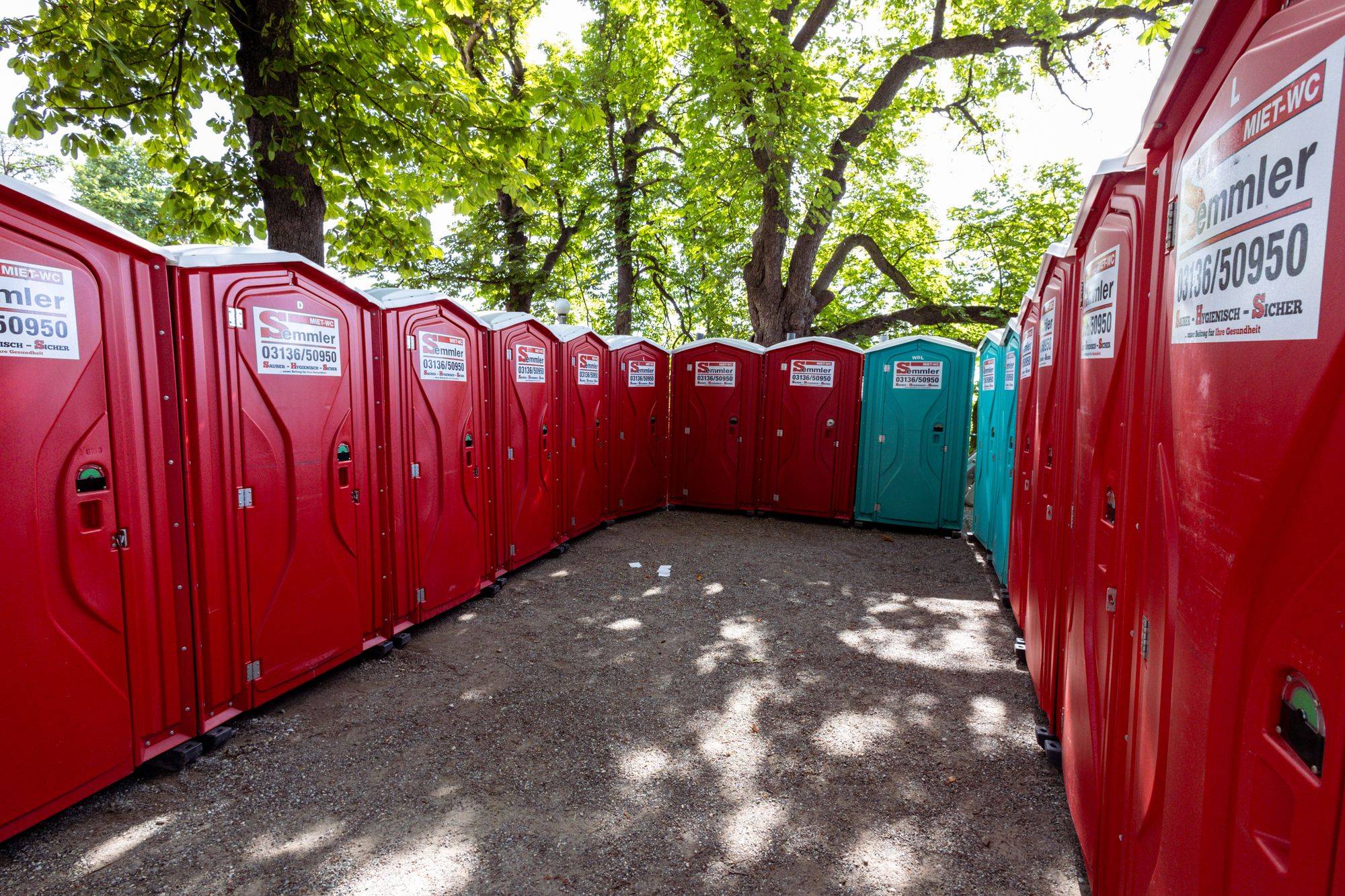
Portable restroom
Women's designated unit
Locked, signed unit designated for female and nonbinary workers
Quick answer
A women's designated restroom unit from PottyLine costs $199 per 28 days on a construction site, including delivery, pickup, weekly service and tax within 25 miles of Hayward. It is a 44 by 48 by 91 inch unit with a 70-gallon tank, a keyed lock, exterior signage and a sanitary-product bin: the designated women's restroom AB 521 proposed, which we recommend on sites with 5+ workers.
- Dimensions
- 44" × 48" × 91"
- Tank
- 70 gal
- Service
- Weekly, included
- Keyed lock, keys issued to the site foreman
- Clearly signed exterior
- Sanitary-product disposal bin
- Hand sanitizer dispenser
- Designated women's restroom, the arrangement AB 521 proposed
Price includes delivery, pickup and tax inside our 25-mile zone.
Specifications
The women's designated unit is a standard restroom built out for one job: giving the female and nonbinary employees on a construction site a toilet that is theirs, locked, signed and stocked. Everything about the shell is the same as the standard unit; everything about how it is controlled is different.
| Spec | Women's designated unit |
|---|---|
| Exterior (W × D × H) | 44" × 48" × 91" |
| Footprint | 44" × 48" (about 14.7 sq ft) |
| Waste tank | 70 gal |
| Lock | Keyed exterior lock; 2 keys issued to the foreman |
| Signage | Exterior "Women / designated" sign, visible from the cluster approach |
| Sanitary bin | Lined disposal bin, emptied at every service |
| Sanitizer | Interior hand-sanitizer dispenser |
| Flush / sink | No (pair with a handwash station for §1527) |
| Light | Translucent roof |
| Weight | Ask us for the spec sheet |
| Service | Weekly, included; bin liner replaced each visit |
| Truck access | Firm, level ground; hand-rolled from the truck |
Because the unit is physically identical to a standard, it fits the same placement spot and the same service visit, which is why it costs only $10 more per month.
What's included and optional add-ons
Included
- Delivery and pickup within 25 miles of Hayward (Mon–Sat, 6 AM – 6 PM)
- Keyed lock with 2 keys, re-keyed free if lost
- Exterior signage
- Sanitary-product disposal bin with weekly liner change
- Weekly service: pump-out, wash-down, deodorizer, restock of paper and sanitizer
- Dated photo receipt sent by text or email after each visit
- Sales tax, 24/7 online booking, Net-30 for approved contractors
Optional add-ons
- Second weekly service: $45 per unit per week
- Handwash station: $129/month (required at 1 per 20 workers under §1527)
- Cal/OSHA compliance pack: standard + women's + handwash for $479, saving $38
- Next-day delivery: $95 (order by 2 PM) · off-hours delivery: $150
- Fence panels 6 × 12 ft to screen the cluster: $35 per panel per month, 10 minimum
- Damage waiver: 8%, optional
Women's designated unit pricing
| Rental type | Price | Includes | Term |
|---|---|---|---|
| Construction (monthly) | $199 | Delivery, pickup, weekly service, keys, signage, bin, tax | 28 days |
| Cal/OSHA compliance pack (standard + women's + handwash) | $479 | Three units, weekly service, tax; saves $38 | 28 days |
| Event | — | Not offered; see the deluxe unit for 3-day rentals | — |
What changes the price:
- Service frequency. Weekly is included. Sites where the designated unit serves more than about 10 employees add a second visit at $45 per week.
- Distance. Included within 25 miles of Hayward; Fremont at 12 miles and Oakland at 16 miles are well inside. San Jose at 28 miles adds about $11.
- Quantity. One per jobsite is our recommended baseline (the arrangement AB 521 proposed); larger sites with 21 or more female employees need a second toilet for them under the §1526 ratio.
- Season. No surcharge; the May–October +15% applies to trailers only.
The pricing page shows the compliance pack alongside every other construction price, and the AB 521 guide explains what the bill proposed and why the rule is not adopted as of October 2026.
Get your all-in price for a women's designated unit in 30 seconds: Instant price · or call (650) 977-2883.
Women's designated unit vs. other options
The real question is not "women's unit or trailer" but "women's unit or just another standard unit with a padlock". The table shows what the $10 buys.
| Option | Monthly | Event | Flush | Sink | A/C | Accessible | Lock | Best for |
|---|---|---|---|---|---|---|---|---|
| Standard restroom | $189 | $195 | No | Sanitizer only | No | No | Interior slide latch | General crew toilet |
| Women's designated unit | $199 | — | No | Sanitizer only | No | No | Keyed exterior lock, 2 keys | Designated women's unit (recommended) |
| Luxury flushing | $289 | $295 | Foot pump | Interior sink | No | No | Interior latch (hasp on request) | Supers, long-term sites, events |
| ADA / Title 24 | $269 | $325 | No | Sanitizer only | No | Yes | Interior lever | Mixed-use sites, public clusters |
| 2-stall luxury trailer | $4,900 | $2,495 weekend | Porcelain | Running water | Yes | No | Interior | Office-grade restrooms on long projects |
A standard unit with a hardware-store padlock has three problems: the padlock is not re-keyable at service, the unit has no signage so it gets used by everyone when it is found open, and there is no sanitary bin. The women's unit fixes all three, and the service log shows the unit was locked at every visit, which is the evidence an inspector asks for.
Best for
- Every construction site with female or nonbinary employees. That is the scope AB 521 proposed, and where we recommend it. On a typical 15-person crew in Oakland, the compliance pack (standard + women's + handwash) is the complete §1526/§1527 setup at $479. The construction page sizes larger crews.
- General contractors standardizing across projects. GCs running 4–10 sites in Fremont, Hayward and the Tri-Valley can put one women's unit on every site by default and bill it through one consolidated Net-30 invoice.
- Public-agency and prevailing-wage projects. Agencies and their contractors in San Jose include the designated unit in the bid as a line item; the government page explains how the service log in your online account documents the locked unit at every visit for compliance files.
- Film and TV crews on long builds. Set construction for a multi-week shoot is a construction site under Cal/OSHA; the film page covers how the designated unit fits a base camp.
- Union and apprenticeship sites. Projects with apprenticeship programs tend to have higher female participation and get asked about the designated unit first; one per jobsite is our recommended baseline, one per 20 female employees is the §1526 ratio.
Site requirements and placement
- Ground: firm and level, same as a standard unit. We stake and shim on slopes.
- Location in the cluster: place the designated unit at the end of the row nearest the site office or gate, where it is visible to the foreman and under the gate camera if there is one. Visibility is the cheapest security.
- Access for service: truck within about 60 feet, route clear of parked vehicles on service day. The driver carries the master key for the keyed lock, so nobody on site needs to be present.
- Signage line of sight: the exterior sign should be readable from the approach; do not place the unit with the signed side against a fence.
- Handwash adjacency: 8 CCR §1527 requires washing facilities near the toilets; put the handwash station between the standard and designated units so one station serves both.
- Public right-of-way: a sidewalk or parking-lane placement needs the city's permit, for example Oakland's Obstruction Permit with 5'6" of sidewalk left clear; none is needed on private property or inside the fenced site.
Service and cleaning standard
The weekly visit on a women's designated unit has 8 steps, one more than a standard unit, and the lock status is recorded on every receipt.
- Unlock with the master key and note on the receipt that the unit was found locked.
- Pump the 70-gallon tank and rinse.
- Wash and disinfect the seat, walls, floor, door and lock hardware.
- Remove and replace the sanitary-bin liner and disinfect the bin.
- Recharge the deodorizer.
- Restock toilet paper and refill the sanitizer dispenser.
- Photograph the interior and time-stamp the photo.
- Re-lock, photograph the locked door, and send the receipt to the site contact by text or email.
Waste goes only to permitted receiving facilities, such as EBMUD Resource Recovery at 2020 Wake Avenue in Oakland for the East Bay and the City of San José hauler program for the South Bay.
Compliance notes
- AB 521 (Chapter 529, Statutes of 2023) — asked the Cal/OSHA Standards Board to draft, before December 1, 2025, a proposal to consider revising §1526 to require at least one single-user toilet per jobsite designated for employees who identify as female or nonbinary. As of October 2026 that rule has not been adopted; the Board's October 2025 packet lists the project as rulemaking withdrawn, so the designated unit is our recommendation, not a legal requirement. Bill status at leginfo.legislature.ca.gov. Our AB 521 guide tracks it.
- Cal/OSHA 8 CCR §1526 — one toilet per 20 employees of each sex; crews under 5 may share one lockable single-user unit. Text at dir.ca.gov §1526. Our Cal/OSHA guide has worked examples: 12 men + 3 women = 2 toilets + 1 handwash.
- Cal/OSHA 8 CCR §1527 — one handwashing facility per 20 employees, soap and single-use towels; sanitizer alone does not satisfy it.
- ADA 2010 Standards §203.2 — worker-only construction toilets are exempt from accessibility requirements, so the designated unit does not need to be accessible unless non-workers share the cluster.
Frequently asked questions
Does AB 521 require a women's unit on a construction site?
Not as of October 2026. AB 521 (2023) asked Cal/OSHA's Standards Board to consider revising 8 CCR §1526 to require at least one single-user toilet per jobsite designated for female and nonbinary workers, but the revised §1526 has not been adopted. The legal minimum is still 1 toilet per 20 employees of each sex. We recommend a designated unit anyway.
How much does a women's designated unit cost?
$199 per 28-day cycle, $10 more than a standard unit, with delivery, pickup, weekly service, consumables and tax included within 25 miles of Hayward. Bundled in the Cal/OSHA compliance pack with a standard unit and a handwash station it is $479 for all three, which saves $38 against the separate prices.
Is the women's unit a different size from a standard porta potty?
No. It is the same 44 by 48 by 91 inch unit with the same 70-gallon tank. What differs is the keyed lock in place of the slide latch, the exterior signage, the sanitary-product disposal bin inside and the way we service it. The identical footprint means it slots into any existing cluster.
Who gets the keys?
We issue two keys to the site foreman or superintendent named on the booking, and the foreman distributes them to the designated employees. If a key is lost we re-key the lock at the next weekly service at no charge. The unit is never left unlocked between services, which is the point of the design.
Does one women's unit count toward the Cal/OSHA 1-per-20 ratio?
Yes. 8 CCR §1526 requires one toilet per 20 employees of each sex, so the women's unit is the first toilet for female employees and counts fully. For a crew of 12 men and 3 women you need 1 standard unit, 1 women's unit and 1 handwash station, which is exactly the compliance pack.
Can I rent the women's unit for an event?
The women's unit is a construction product sold on the 28-day cycle; there is no event rate. For a 3-day event where you want a locked, signed women-only unit, a Luxury flushing unit at $295 with a padlock hasp is the usual answer, and we can add the signage on request.